



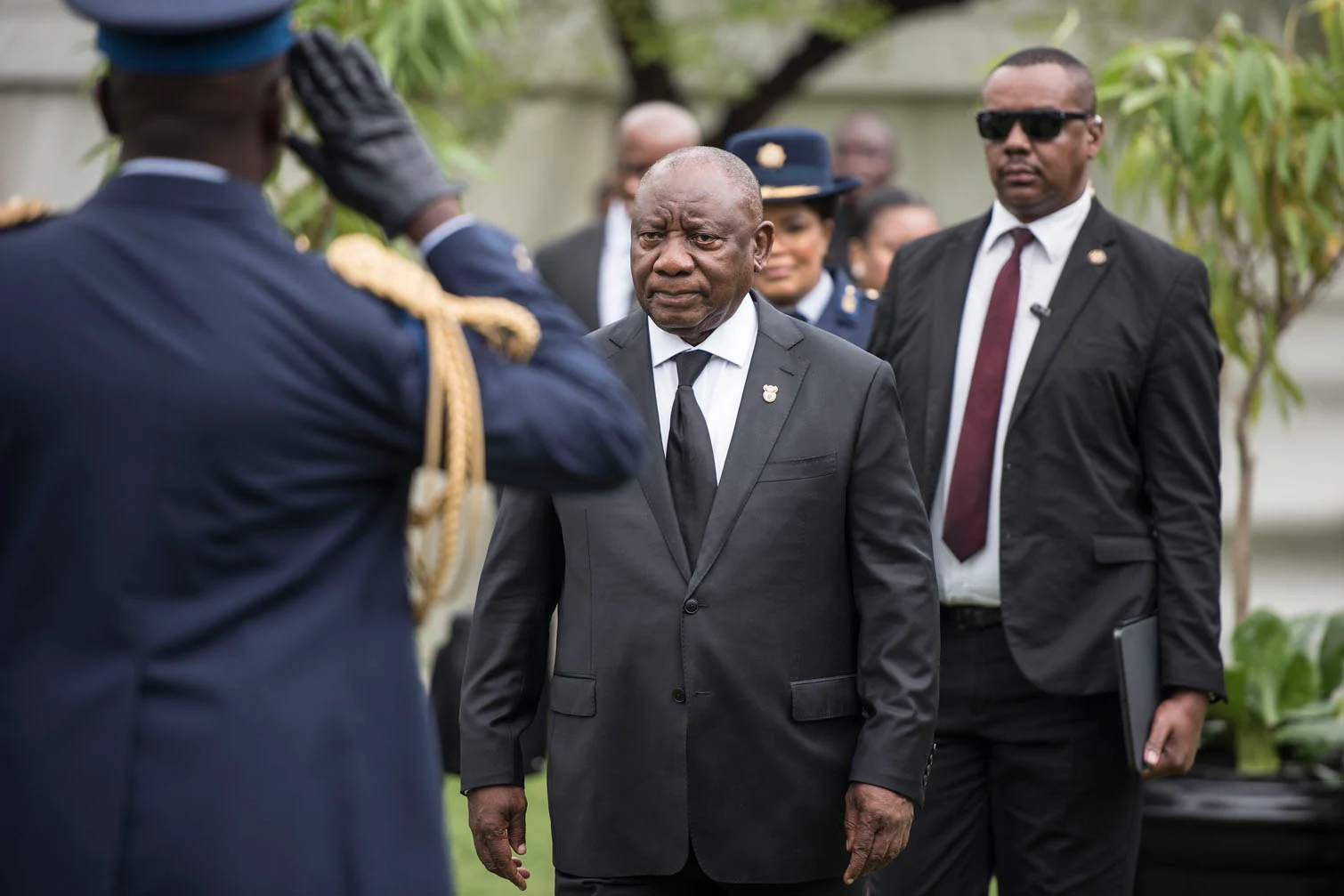
The ruling, delivered on Friday by a full bench comprising Judges André le Grange, Matthew Francis and Diane Davis, means the National Assembly's impeachment committee must suspend its work until Ramaphosa's review application challenging the findings of the Section 89 independent panel has been heard. The review application is scheduled to be heard from 2 to 4 September 2026.
Split Decision
In a judgment that reflected the complexity of the legal arguments, the court delivered three separate judgments. The first judgment found that Ramaphosa had failed to establish a case and proposed that the application should be dismissed. However, the second and third judgments granted an interim interdict for a limited duration.

As a result, National Assembly Speaker Thoko Didiza and the chairperson of Parliament's impeachment committee have been ordered to halt the committee's proceedings pending the outcome of Ramaphosa's review application. The court postponed a decision on legal costs until after the review application has been finalised.
The Legal Argument
Ramaphosa approached the court seeking to prevent the impeachment inquiry from proceeding until the court decides whether the Section 89 panel's findings should be reviewed and set aside. His legal team, led by Advocate Wim Trengove SC, argued that allowing the impeachment committee to begin its work before the review application is decided would cause the president "irreversible injustice".
"Very significant harm will be done to the president if the hearing goes ahead and it is ultimately found that the report was invalid," Trengove argued. He noted that a president removed under section 89 forfeits presidential benefits and pension and is barred from holding public office in future, making the impeachment process uniquely serious. Trengove also argued Parliament would suffer little prejudice if the committee's work were temporarily halted because the review application is due to be heard in early September, with judgment expected shortly thereafter.
A central plank of Ramaphosa's review application is that the independent panel had applied the wrong legal test. His legal team argued parliamentary rules required the panel to determine whether there was sufficient evidence of serious misconduct, whereas it assessed only whether there was prima facie evidence. The panel, chaired by retired Chief Justice Sandile Ngcobo, had previously found that the president had "questions to answer" over the theft of approximately $580,000 (about R9.6 million) from his Phala Phala game farm in Limpopo in February 2020.
Committee Chair Weighs Next Steps
Following the judgment, the chairperson of the Section 89 committee, Makashule Gana, said MPs would study the ruling to determine what work could continue. Gana noted that the committee understood the interdict applied specifically to the public hearings.
"We note the interdict is against the public hearings pending the review application. The committee will study the full judgment to see which aspects of the work can proceed," Gana said in a statement issued through Parliament. This suggests that administrative and preparatory work, such as appointing evidence leaders and finalising witness lists, could potentially continue while the public hearings remain on hold.
Political Parties Divided
The judgment has drawn sharply divided responses from political parties. The ANC welcomed the ruling, saying it reaffirmed the constitutional right of every citizen, including the president, to seek legal protection when they believed a public process was unlawful or procedurally unfair.
ANC MP Mikateko Mahlaule said the party respected the judgment and called on all parties to do the same. "This judgment has nothing to do with whether the president is guilty or not. It simply says the president sought relief pending the review being finalised," Mahlaule said.
The DA, however, said the judgment did not amount to an endorsement of Ramaphosa's conduct or clear him of any wrongdoing linked to the Phala Phala scandal. DA leader Geordin Hill-Lewis called for the review application to be heard urgently, arguing South Africans were entitled to answers on the allegations surrounding the theft of foreign currency from the president's Limpopo farm. DA MP Glynnis Breytenbach described the ruling as "not necessarily a fatal delay," adding that it was "merely postponing the inevitable".
The MK Party and EFF were sharply critical of the judgment. MK MP Visvin Reddy described the ruling as "absolutely shocking," accusing Ramaphosa of attempting to delay the process. "If he were innocent, as he claims to be, what's stopping the impeachment process from continuing where he can go and tell his side of the story? Obviously he's trying every trick in the book to delay the truth from coming out because he knows it's going to affect him and his position as president," Reddy said.
The EFF's Nontando Nolutshungu said it was "really shocking" that a high court had effectively overturned a Constitutional Court directive, arguing that Parliament had been ordered to proceed with the impeachment inquiry.
Background to the Scandal
The legal battle follows a Constitutional Court ruling in May 2026 that found Parliament had acted unlawfully when it blocked impeachment proceedings against Ramaphosa in December 2022. That ruling required the National Assembly to establish a 31-member impeachment committee to investigate the allegations further. The committee is chaired by Rise Mzansi chief organiser Makashule Gana.
The Phala Phala scandal dates back to February 2020, when approximately $580,000 in cash was stolen from Ramaphosa's private game farm in Limpopo. Ramaphosa has consistently denied wrongdoing, maintaining that the money was proceeds from the sale of buffaloes and that he reported the theft to authorities. The incident only came to light after former State Security Agency director-general Arthur Fraser laid criminal charges against the President over the theft of the cash.
The independent panel, appointed in 2022, found that there was prima facie evidence that Ramaphosa may have committed serious violations of the Constitution or the law and recommended that Parliament investigate the matter further. However, the ANC's parliamentary caucus later voted against the adoption of the report, effectively halting impeachment proceedings against the President at that time.
What Happens Next
The interdict means the impeachment committee cannot proceed with public hearings until Ramaphosa's review application has been decided. The review application is scheduled to be heard from 2 to 4 September 2026, with judgment expected shortly thereafter.
The committee must now determine which aspects of its work can proceed under the court order. Parliamentary spokesperson Moloto Mothapo said Parliament would study the judgment before deciding on its next steps. Meanwhile, the Presidency has said Ramaphosa "reaffirms his respect of judicial independence and separation of powers enshrined in our constitution" and will "continue to co-operate with, and abide by, processes of accountability".
Should the impeachment proceedings ultimately go ahead, they would be the first for a sitting South African president.
Despite the court victory, significant political obstacles remain for Ramaphosa. The interdict is temporary and the review application may yet fail. Additionally, opposition parties have indicated they will continue to push for accountability, with the MK Party noting that while their options are limited, they will be seeking legal advice on how to proceed.
Furthermore, the Phala Phala affair raises deeper constitutional questions about the rule of law and institutional accountability in South Africa. As political analyst Charles Matseke noted, the issue is "no longer simply about hidden dollars, a farm burglary or allegations of presidential misconduct. It has become a test of South Africa's constitutional resilience in a coalition era".
Nevertheless, the interdict grants Ramaphosa a crucial reprieve, allowing him to fight the legal battle on his own terms rather than in the high-stakes forum of a parliamentary impeachment inquiry. The outcome of the September review application will ultimately determine whether the impeachment process proceeds or collapses entirely.
With reporting from The Witness, Reuters, Sunday Times, TimesLIVE, The Citizen, EWN, SABC News, and Vanguard.



Comments (0)
No comments yet. Be the first to share your thoughts!