


This feature does not seek to settle these debates. Instead, it examines the evidence, the arguments and the implications of some of the most powerful and contentious claims shaping contemporary discourse on race, religion and history.
Part One: The Black Pharaohs and the Pyramids
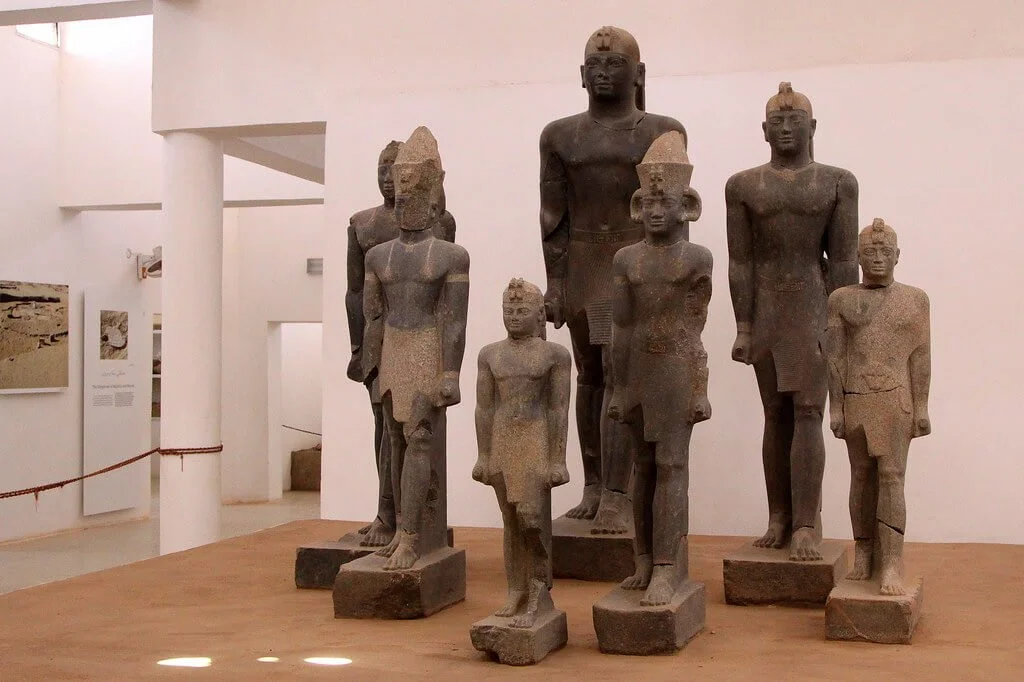
The claim that ancient Egypt was ruled by Black African pharaohs and that the Giza pyramids were built by Black Africans is central to Afrocentric historical thought, but may have some degree of truth to it. The most prominent advocate of this view was Cheikh Anta Diop, the Senegalese historian and anthropologist who argued throughout the twentieth century that ancient Egypt was a Black civilization. Diop insisted that the only reason any scholar would reject the Blackness of ancient Egypt was a deeply internalized anti-Black racism.

Modern scholarship, however, presents a more complex picture. The ancient Egyptians did not think of "race" as it is understood today and applying modern racial categories to ancient populations is widely considered anachronistic. While pharaohs from earlier dynasties shared phenotypic features with Kushites, who would be considered "Black" by current criteria, the idea of a monolithic "Black Egypt" or a monolithic "White Egypt" is rejected by most Egyptologists.
The archaeological and craniometric evidence does, however, demonstrate a close relationship between ancient Upper Egyptian and Lower Nubian populations and population continuity in Egypt from predynastic phases into the dynastic era. This suggests that Egypt and Kush shared origins and that ancient Egyptian civilization arose from a Pastoral Neolithic cattle-based culture encompassing Northern Sudan and much of ancient Northeast Africa.
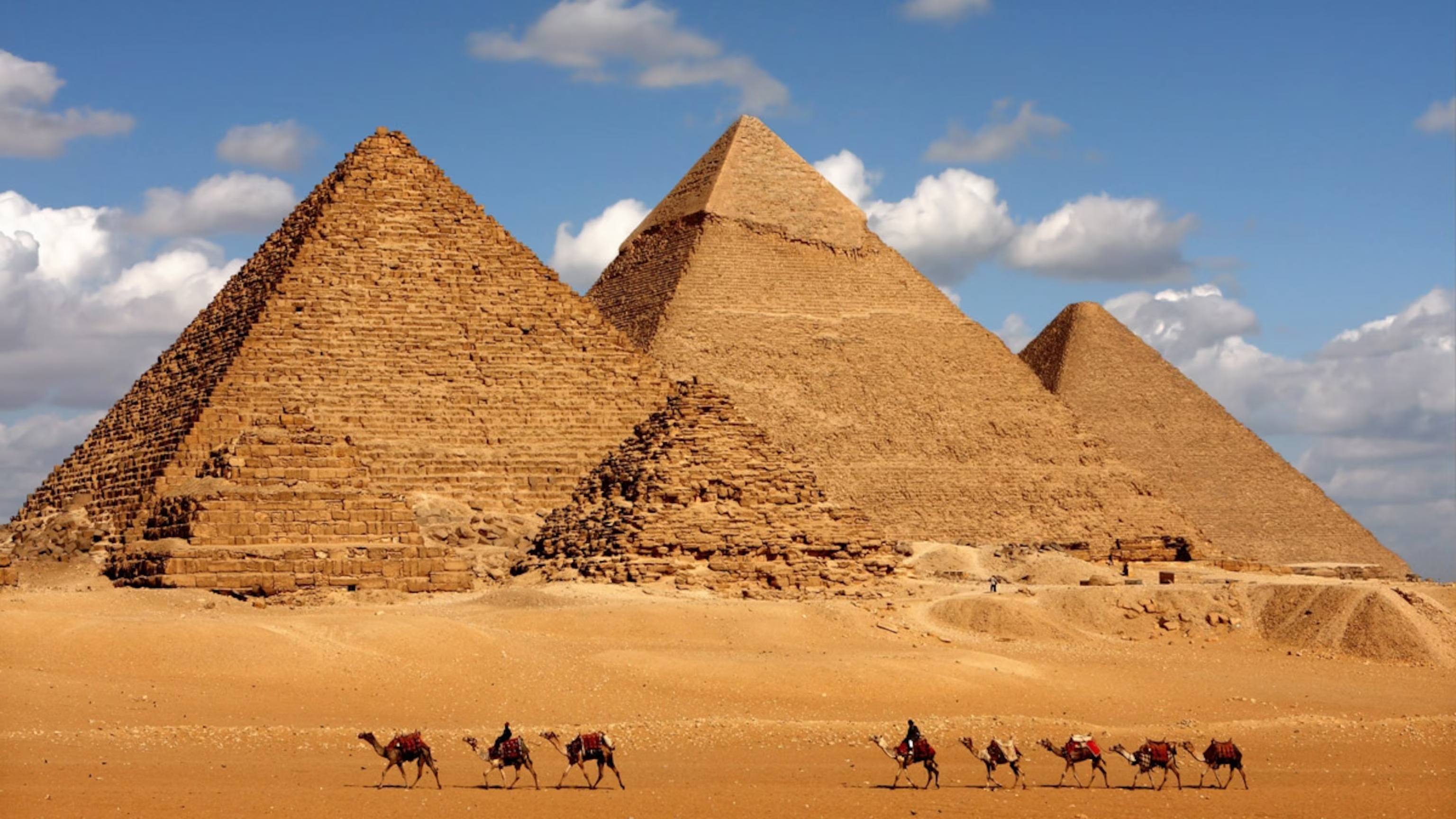
The claim that the pyramids were built by Black Africans is often tied to the broader argument that Egypt was a Black civilization. Some Afrocentric authors, such as Robert Bauval, have argued that an advanced Black African civilization inhabited the Sahara long before Pharaonic Egypt and that this civilization originated the pyramids and other monumental structures. Mainstream Egyptology, however, maintains that the pyramids were built by an Egyptian workforce, as evidenced by archaeological discoveries such as the diary of Merer, an official responsible for transporting stone blocks from quarries to the pyramids.
The Black Pharaohs of Egypt
Part Two: The Sphinx as a Black Woman?
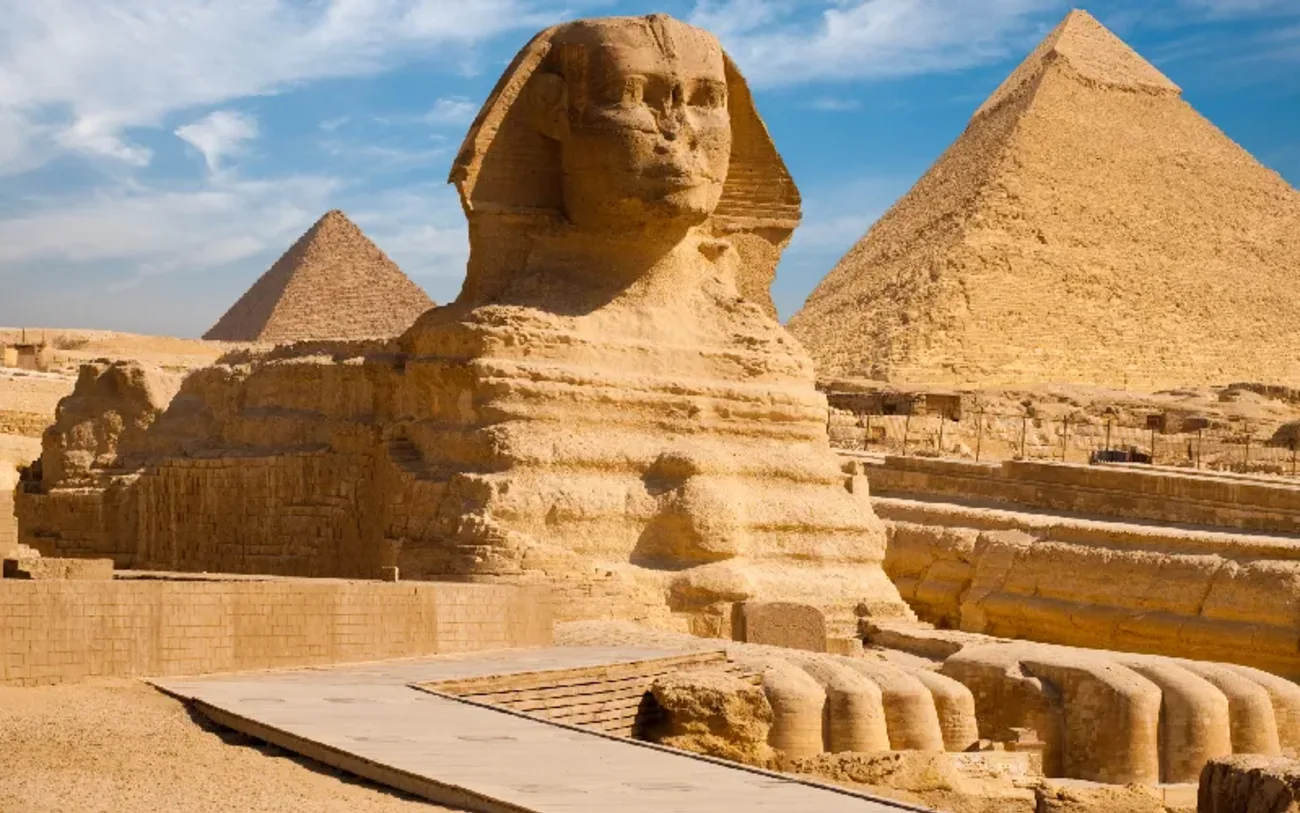
The identity of the Great Sphinx of Giza is one of the most enduring mysteries of ancient Egypt. The statue, a recumbent lion with a human head, is believed by virtually all Egyptologists to represent the likeness of the Pharaoh Khafre, whose pyramid complex it directly faces.
However, alternative theories have long circulated. Some researchers, including Afrocentric scholars, have argued that the Sphinx was originally carved in the image of a Black African, possibly a woman and that its face was later recarved or altered. The claim that the face of the Sphinx is that of a Black woman has been promoted by figures such as Professor Asa Hilliard, who spoke of "the first twelve pharaohs of Egypt" being Black and the Sphinx representing a Black woman.
The evidence for this claim is largely circumstantial. Early descriptions of the Sphinx, including one by the French writer Constantin François de Chassebœuf, comte de Volney, described the face as "typically negro in all its features." Some Afrocentric authors have pointed to the Sphinx's facial proportions and the hypothesis that the statue was originally a lion with a woman's face, possibly representing a goddess or the sign of Virgo.
Mainstream Egyptologists, however, overwhelmingly reject the idea that the Sphinx was originally a Black woman. David S. Anderson, in his study of alternative archaeologies, describes the claim that "the sphinx was a portrait statue of the black pharaoh Khafre" as a form of pseudoarchaeology not supported by evidence. The debate over the Sphinx's original identity remains unresolved in popular discourse, but the scholarly consensus firmly favours Khafre.
The Great Sphinx
Part Three: The Black Hebrew Israelite Claim
One of the most explosive and controversial claims in contemporary discourse is that the original Jews of the Bible were Black Africans and that modern Jews are impostors who have stolen the identity of the true Israelites. This ideology, known as Black Hebrew Israelism, holds that all the original Jews of the Bible were Black and that Zion is located in Ethiopia.
The foundational claim is that when the kingdom of Israel fell, the Israelites were scattered across the African continent and later selectively targeted by enemy African tribes, who captured and sold them to European slave traders. According to this narrative, the Jews of today are white interlopers who have stolen and distorted an "African religion" and wrongfully claimed it as their own.
Black Hebrew Israelites are not the same as Black Jews or Jews of colour. They are an autonomous African American movement whose members self-identify as Jews but whose claims of Jewish heritage have been investigated and rejected by the Chief Rabbinate of Israel, which decided that they were not really Jewish and were not entitled to citizenship under Israel's Law of Return.
Scholars of Black Judaism draw a sharp distinction between the Hebrew Israelite movement and historically Jewish communities of African descent. While some Black Jews have legitimate Jewish ancestry, most Black Hebrew Israelites are descended from African American Christians and have adopted a revisionist history that is not supported by genetic, historical, or archaeological evidence.
The claim that the original Jews were Black and that modern Jews are impostors is widely regarded as antisemitic. The Anti-Defamation League and other organisations have documented how Black Hebrew Israelite ideology has been used to promote antisemitic conspiracy theories, including Holocaust denial and claims that Jews controlled the Atlantic slave trade.
King Sennacherib of Assyria
Part Four: The Holocaust and the Claim of Stolen Identity
The claim that the Holocaust was perpetrated against the original Black Jews and that the reparations paid by Germany after World War II were given to a "Turkish clan" that had impersonated the true victims is without any historical foundation.
The Holocaust was the systematic, state-sponsored persecution and murder of six million European Jews by Nazi Germany and its collaborators between 1941 and 1945. While there were Black victims of Nazi persecution, the overwhelming majority of those murdered were European Jews and their descendants are the primary recipients of Holocaust reparations.
There have been documented cases of fraud in Holocaust reparations. In 2010, seventeen people, including employees of the Conference on Jewish Material Claims Against Germany, were charged with defrauding the organisation of more than $42 million over sixteen years. The suspects used fake identification documents, doctored government records and a knowledge of Holocaust history to submit thousands of false claims. The fraud involved nearly 5,000 false applications to the Hardship Fund and 658 fraudulent applications to the Article 2 Fund.
However, this fraud was perpetrated by individuals who were already involved in the reparations system and who recruited applicants through Russian-language newspapers. There is no evidence whatsoever that the Holocaust was perpetrated against Black Jews, or that the reparations were systematically diverted to a "Turkish clan" that had stolen the identity of the original Israelites.
Conclusion: The Politics of Historical Memory
The claims examined in this article are not merely academic disputes. They are battles over identity, memory and the politics of who gets to define history. Afrocentric and Black Hebrew Israelite narratives offer powerful counter-narratives to centuries of Eurocentric scholarship that sought to deny Africa's contributions to civilization. They provide a framework for understanding the African diaspora's connection to the ancient world and for reclaiming a heritage that colonialism and slavery attempted to erase.
Yet, as the evidence shows, not all of these claims are equally supported by the historical and archaeological record. The Blackness of ancient Egypt is a complex and contested question. The identity of the Sphinx remains a mystery. The Black Hebrew Israelite claim to be the true Israelites is rejected by scholars and Jewish authorities alike. And the claim that the Holocaust was perpetrated against Black Jews and that reparations were stolen by impersonators has no basis in fact.
What is beyond dispute is that the history of Africa and its diaspora has been systematically distorted, suppressed and stolen. The struggle to reclaim that history is a legitimate and necessary one. But it must be waged with evidence, rigour and a commitment to truth, not with conspiracy theories that ultimately undermine the very cause they seek to advance.
The original Jews, the builders of the pyramids, the face of the Sphinx—these are not questions that can be answered by ideology alone. They require us to look at and understand the evidence, to weigh it honestly and to be willing to follow it wherever it leads. That is one of the most feasible and possible ways to truly reclaim what has been lost.
Please Note: There are very few countries where their culture/ancestry became a science/study like Egypt with Egyptology. Political reasons are thus involved in controlling such vast and rich culture. Many claims keep surfacing of Egyptologists denying representing the truth about Egypt in several cases.
So, it's becoming clear that Egyptologists are agents of misinformation trying to explain away the truth about ancient Egypt which keeps revealing the true identity of the ancient Egyptians as Black.
This article was prepared using historical and archaeological sources, including the work of Cheikh Anta Diop, scholarly studies on Black Judaism and archival records on Holocaust reparations.












Comments (1)