


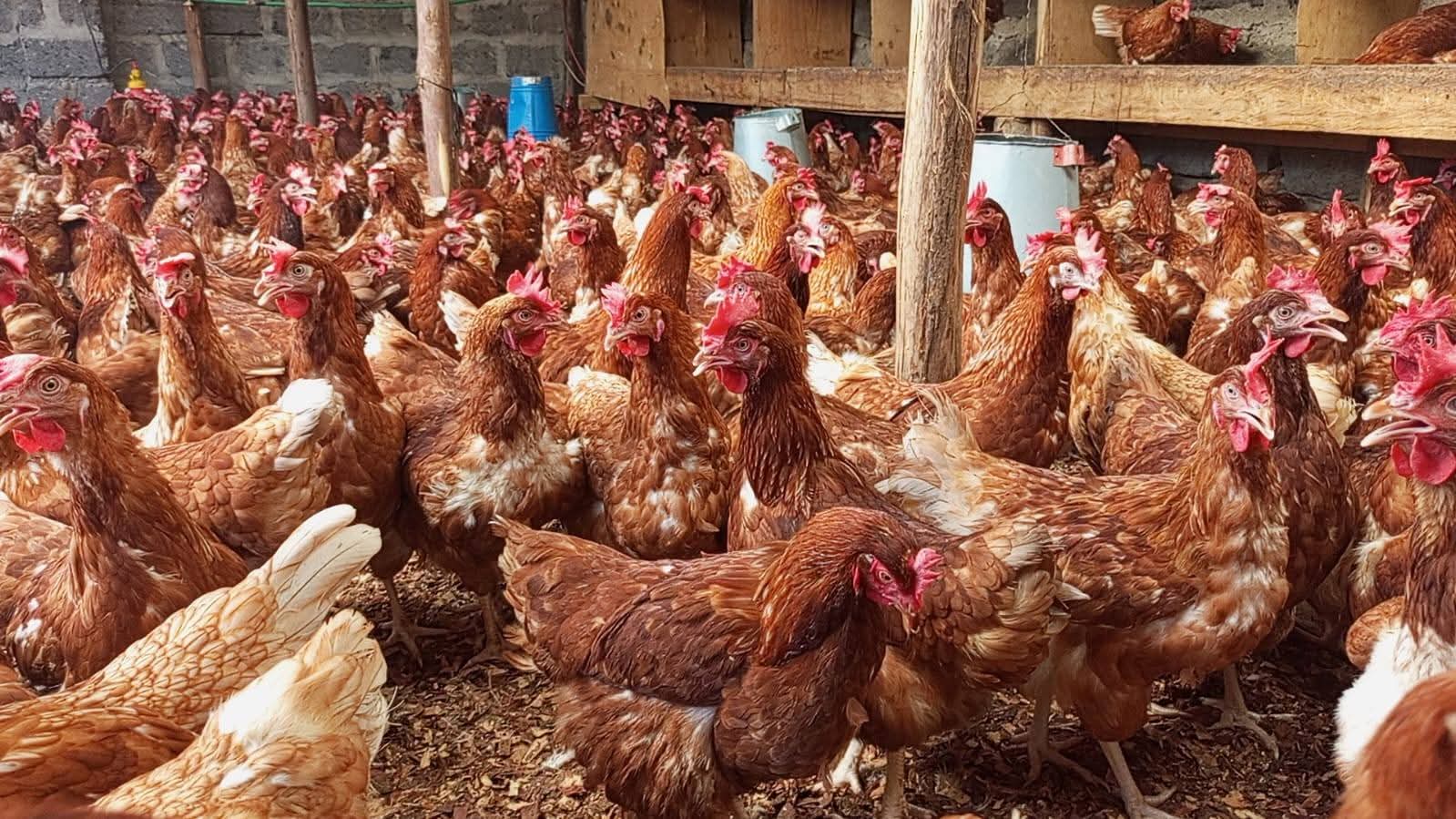
Across Kenya, a striking contrast defines the young population: high literacy, advanced education, and vast economic potential paired with severe employment scarcity.
Agriculture forms the foundation of Kenya’s economy—contributing over 33% of the GDP and employing nearly 75% of the total population. Yet, despite being the nation's economic engine, youth participation in agriculture remains critically low, with only 10% of young people actively engaged in farming.

The Paradox of the Educated, Jobless Generation
- A Young Nation: Over 75% of the Kenyan population is under 35 years old, with a median age of just 19 years.
- Massive Workforce Entry: Approximately 1 million young people enter the job market every year, with nearly 69% of this cohort residing in rural areas.
- High Literacy Dividends: National literacy stands at 91% for women and 94% for men. Furthermore, 80% of youth aged 18–35 have attained secondary or post-secondary education, making this generation far more educated than those before it.
The Reality of Employment Challenges among Kenyan youth
Despite their academic qualifications, young Kenyans face significant hurdles in securing formal employment:
The Job Scarcity Gap: 43% of youth are actively seeking white-collar positions, and young people make up over 70% of the country’s entire unemployed population.
Informal Dependency: Between 80% and 85% of working youth remain in insecure, informal jobs without stability or growth prospects.
The NEET Segment: Approximately 16.9% of young people fall into the NEET category—Not in Education, Employment, or Training.
Proportionate Disparity: While overall national unemployment sits lower, the youth cohort (ages 15–34) bears the heaviest burden, reflecting a broad gap between academic output and job creation.
From White-Collar Dreams to the Backyard Office
Faced with unyielding job market friction, a quiet shift is occurring across the country. Rural-urban migration, limited access to land and capital, and traditional negative views of farming once kept youth away from the sector. Today, however, educated youth and women are redefining agriculture on their own terms.
Rather than waiting for elusive corporate roles, young agripreneurs are turning to poultry farming as an accessible, high-yield alternative.
Because commercial poultry rearing requires minimal land compared to traditional crops, it bypasses the land ownership barrier that traditionally excludes young people and women.
Rather than focusing solely on large-scale production, young educated farmers leverage their skills across the entire poultry value chain:
Digital Marketing & Direct-to-Consumer Sales: Connecting farms directly to urban households and hotels via mobile platforms.
Cold-Chain Logistics & Transport: Operating specialized delivery networks for eggs and processed meat.
Feed Formulation & Tech-Driven Management: Applying data, record-keeping, and scientific management to maximize feed conversion ratios. Supported by county governments, international NGOs, and youth-focused agricultural projects, poultry farming is no longer viewed as an odd fallback—it has become a viable, modern enterprise empowering a new generation of self-reliant business owners.
How an Electrical Engineer found himself into his new office: a poultry farm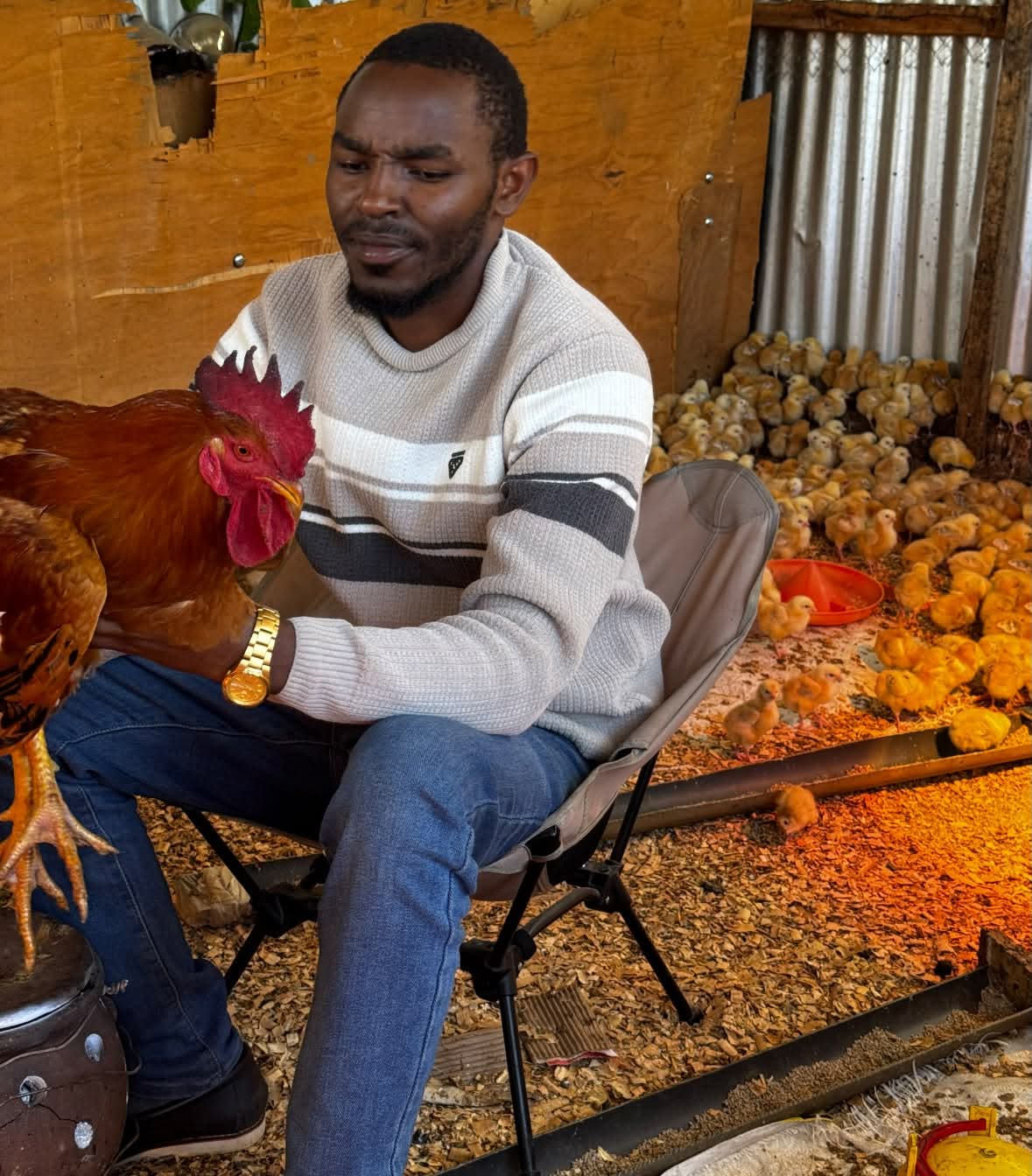
Mr. Lincoln shows that poultry farming can solve youth joblessness in Kenya. Young people can make fast money or steady cash by choosing the right type of chicken and growing their business into a bigger chain.
According to reliable statistics,43% of youth are actively looking for white-color jobs, compared to much lower rates in older cohorts. Youth comprise over 70% of the country’s entire unemployed population. Roughly 80% to 85% of working youth are stuck in insecure, informal jobs. Despite the fact that getting jobs in Kenya has become a nightmare to many youths, they have now created various was to save themselves for a ravaging fang of poverty and joblessness. Poultry farming that initially viewed as odd practice has turned into an office to many.
Meet Lincoln Mwenda who spent years sharpening his mind over complex blueprints, structural calculations, and civil engineering schematics. But when graduation passed and the job market offered only silence and unreturned applications, he realized he needed to build a different kind of foundation.
Rather than letting frustration settle in, Lincoln started small. With five chicks and a handful of feed, he turned a quiet backyard corner into a makeshift hatchery. What began as a desperate fallback option quickly revealed itself as a viable business. Step by step, Lincoln applied his engineering mindset to farming—optimizing coop designs for airflow, tracking feed conversion ratios, and managing space efficiency.
Today, that five-chick start has expanded into a thriving enterprise housing 1,000 birds. His five-year blueprint is even more ambitious: scaling up to a 10,000-bird commercial powerhouse.
For young people waiting for employment, offers clear advice: "Do not wait for the perfect job to find you. The skills you learned in school—problem-solving, discipline, and critical thinking—can be applied anywhere. Start with what you have, no matter how small, and let consistency build the rest."
To the government, his message centers on structural support: direct agricultural financing, youth-centered training hubs, and subsidized input costs for feed and vaccines are essential to turn youth enterprise into long-term national food security.
Turning Local Delicacies into Enterprise: The Expanding Business of Kenyan Poultry
According to Lincoln, the recent census estimated that the country’s population is now over 40 million people. Among this population, over 80% are potential consumers of various poultry products. One of the benefits of poultry farming is that there are so many products and services that he can sell from his poultry farm. He points out that there are many selling points that he looks into. Butcheries, open air markets, Restaurants and local Events has created a ready market for his poultry products. “As we all know, poultry meat is one of the favorite delicacies among many Kenyans”. The demand is even high for the Kienyeji poultry meat owing to its minimal fat and cholesterol levels. This gives the poultry meat farmer an edge in marketing the meat products.
Poultry Farmers Fight High Feed Costs with Local Ingredients and Smart Upgrades
Despite high cost of living, and high price of agricultural inputs, Lincoln is unique he opts to use digital platforms in fighting the high cost and poor quality of commercial farm inputs by mixing his own feeds using local ingredients, upgrading to waste-reducing equipment, and using natural alternatives to expensive drugs.
Can poultry farming solve menace of joblessness in Kenya?
Mr. Lincoln shows that poultry farming can solve youth joblessness in Kenya. Young people can make fast money or steady cash by choosing the right type of chicken and growing their business into a bigger chain.
Broilers and Layers
Broilers (Meat): Grow fast in 5 to 7 weeks. 300 birds can make over KSh 300,000 in 45 days.
Layers (Eggs): Bring steady cash every day. A large flock gives regular daily income after feed costs.
Local Breeds and Expansion
Improved Kienyeji: Strong birds loved for meat and eggs. They sell for KSh 500 to over KSh 1,000 each.
Value Chain Expansion: Smart youth hatch chicks, make their own feeds, or sell direct to hotels.
Strategic Roadmap
To fight youth joblessness through poultry farming, Lincoln terms it wise for the Kenyan government to implement digital skills programs, overseas labor migration agreements, affordable housing labor absorption, and targeted funding initiatives. These strategies aim to build practical work experience, create micro-enterprises, and connect young people to local and international markets. To get more young people into farming, the Kenyan government must make agriculture modern and profitable. Key steps include providing cheap credit, fixing market access, offering hands-on training, and improving rural infrastructure like roads and irrigation. Government should also ensure low prices in agriculture inputs to attract more youth into agriculture.




















Comments (0)
No comments yet. Be the first to share your thoughts!