


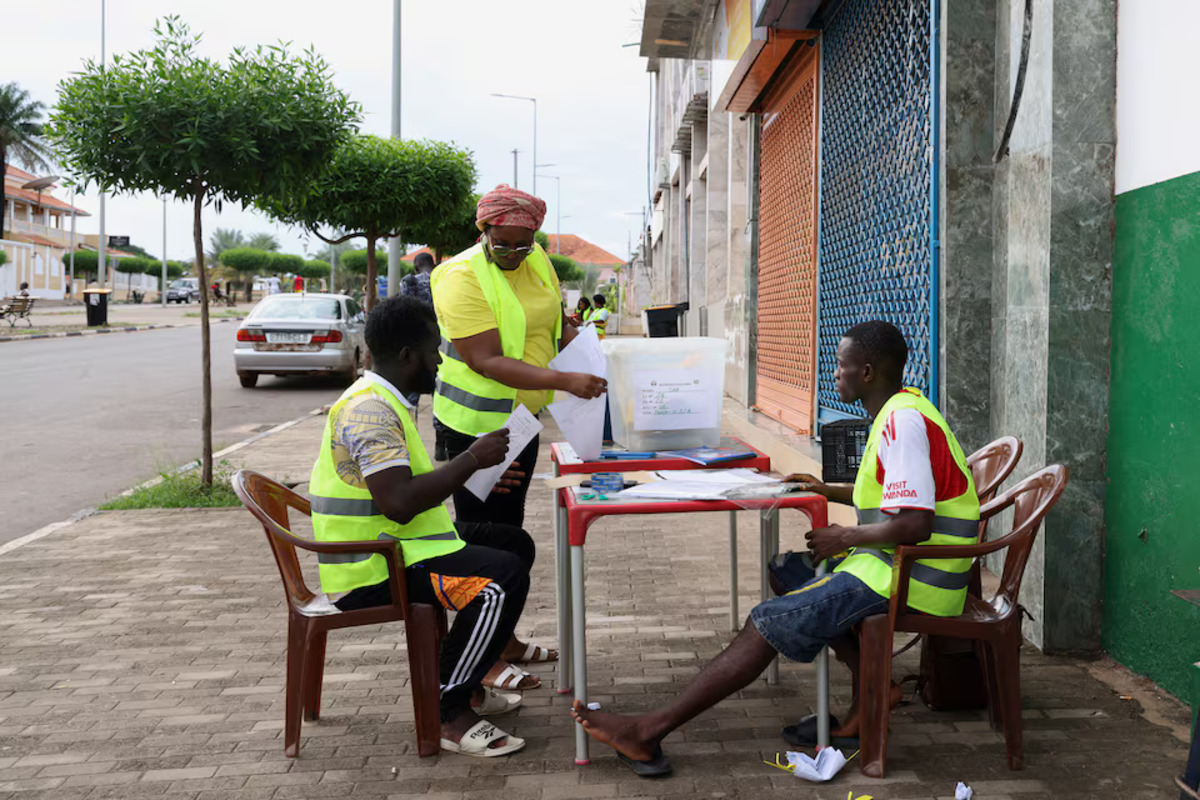
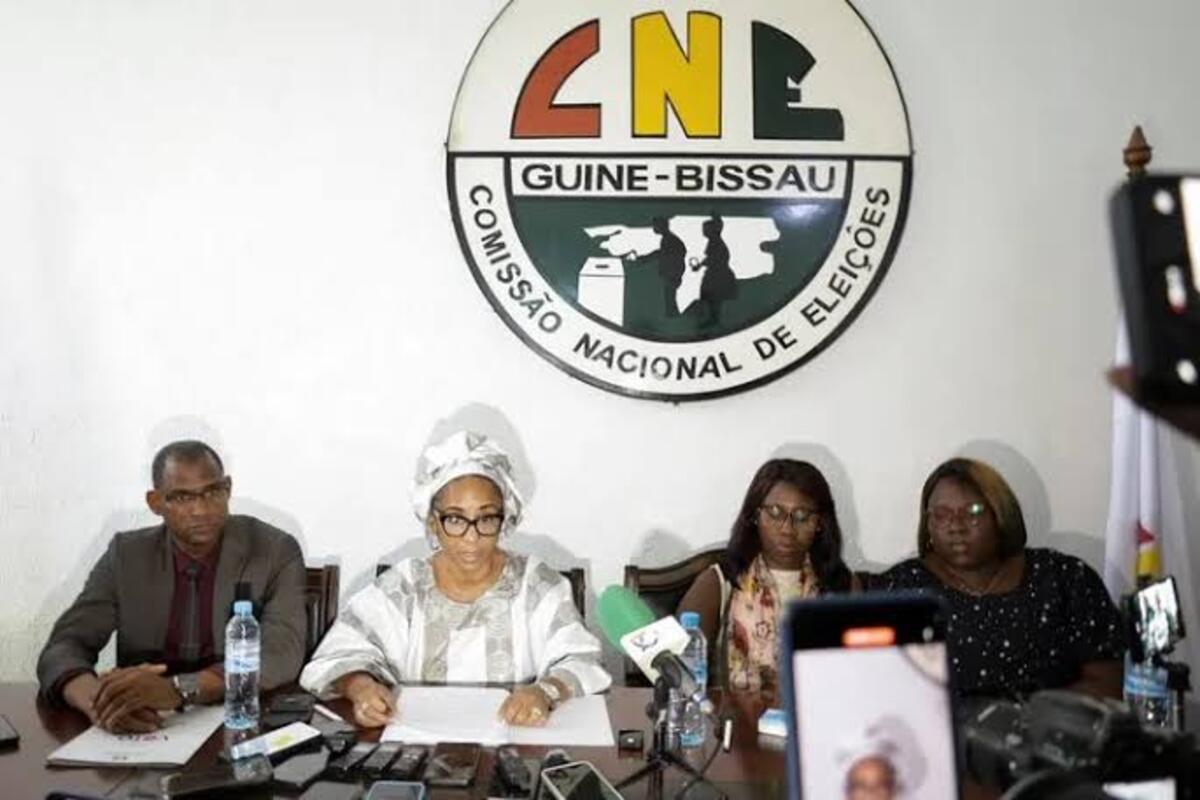
Guinea-Bissau has taken a significant step towards reshaping its political system after voters approved a new constitution in a referendum held on August 30. Provisional results announced by the National Electoral Commission showed that 70 percent of voters backed the new charter, while 30 percent rejected it, with turnout reaching almost 60 percent of registered voters. The referendum was organised by the military-led transitional authorities less than a year after a coup and comes ahead of presidential and legislative elections scheduled for December.
The vote has therefore placed Guinea-Bissau at an important political crossroads. On one side, supporters of the reforms argue that the country’s previous system created persistent conflicts between the president, prime minister and parliament, making effective government difficult. On the other, opposition groups argue that giving the president greater control over the government could weaken the very democratic institutions needed to prevent future political crises.

The debate is particularly important because Guinea-Bissau is not simply changing its constitution under normal political circumstances. The country is attempting to return to civilian rule after another military intervention, meaning that the new constitutional order is being created in the shadow of a coup.
What has changed
The biggest change is the redistribution of executive power.
Guinea-Bissau previously operated under a semi-presidential system in which authority was divided between the president and prime minister. The president served as head of state, while the prime minister, supported by parliament, played the central role in running the government. Under the new constitution, the president will have greater authority over the executive, including the power to appoint and dismiss the prime minister and cabinet and to create or abolish government ministries. The president will also have the ability to dissolve parliament under circumstances defined as a serious political crisis.
The reforms also reduce the size of parliament from 102 seats to 65. At the same time, the number of electoral constituencies will fall from 29 to 12. Supporters say a smaller legislature could make parliamentary work more efficient and create a more manageable political system. Critics, however, worry that fewer parliamentary seats could reduce political representation and make it harder for smaller parties and minority interests to gain influence.
The new constitution also introduces stricter requirements for presidential candidates, including a requirement that candidates must have lived continuously in Guinea-Bissau for the preceding five years. These provisions will influence who can compete for the presidency when the country goes to the polls later this year.
Why does Guinea-Bissau want a stronger president
The answer lies in the country's turbulent political history.
Since gaining independence from Portugal, Guinea-Bissau has experienced repeated political crises, military interventions and coups. Relations between presidents, prime ministers, political parties and the armed forces have frequently broken down, preventing governments from completing their programmes and weakening public confidence in civilian institutions.
The semi-presidential system was itself partly a response to an earlier period of excessive presidential power. Guinea-Bissau introduced power-sharing arrangements in the 1990s in an effort to prevent the concentration of authority that had contributed to abuses of power and political instability.
However, the system did not eliminate political conflict.
Instead, disagreements between presidents and prime ministers sometimes became battles over who actually controlled the government. Parliament could support one political camp while the presidency was controlled by another, creating institutional deadlock.
Supporters of the new constitution therefore argue that a stronger presidency could provide clearer lines of authority.
If the president is directly responsible for appointing and dismissing the government, there is less room for prolonged battles between the presidency and prime minister's office. The argument is that political responsibility becomes easier to identify and government can operate more decisively.
But there is an important problem with this approach.
A system can become more efficient while becoming less accountable.
That is the central concern surrounding Guinea-Bissau's constitutional experiment.
Supporters of the new constitution therefore argue that a stronger presidency could provide clearer lines of authority.
The danger of concentrating power
A powerful presidency is not automatically undemocratic.
Many democratic countries have strong presidents who possess substantial executive authority. The real question is whether other institutions are strong enough to hold the president accountable.
That means an independent parliament must be able to scrutinise government decisions. Courts must be able to enforce the constitution. Electoral institutions must be trusted to administer elections fairly, while journalists and civil society organisations must be able to investigate and criticise those in power.
If those safeguards are weak, however, presidential power can gradually become difficult to challenge.
This concern carries particular weight in Guinea-Bissau because the country has a long history of military involvement in politics. The Africa Center for Strategic Studies has warned that strengthening executive power while weakening institutional oversight could undermine efforts to establish stronger civilian control over the military and create risks for democratic accountability.
The concern is therefore not simply about how much power the president receives.
It is about what happens when that power is combined with weak institutions.
A constitution born under military rule
Perhaps the most controversial aspect of the reform is the circumstances under which it was adopted.
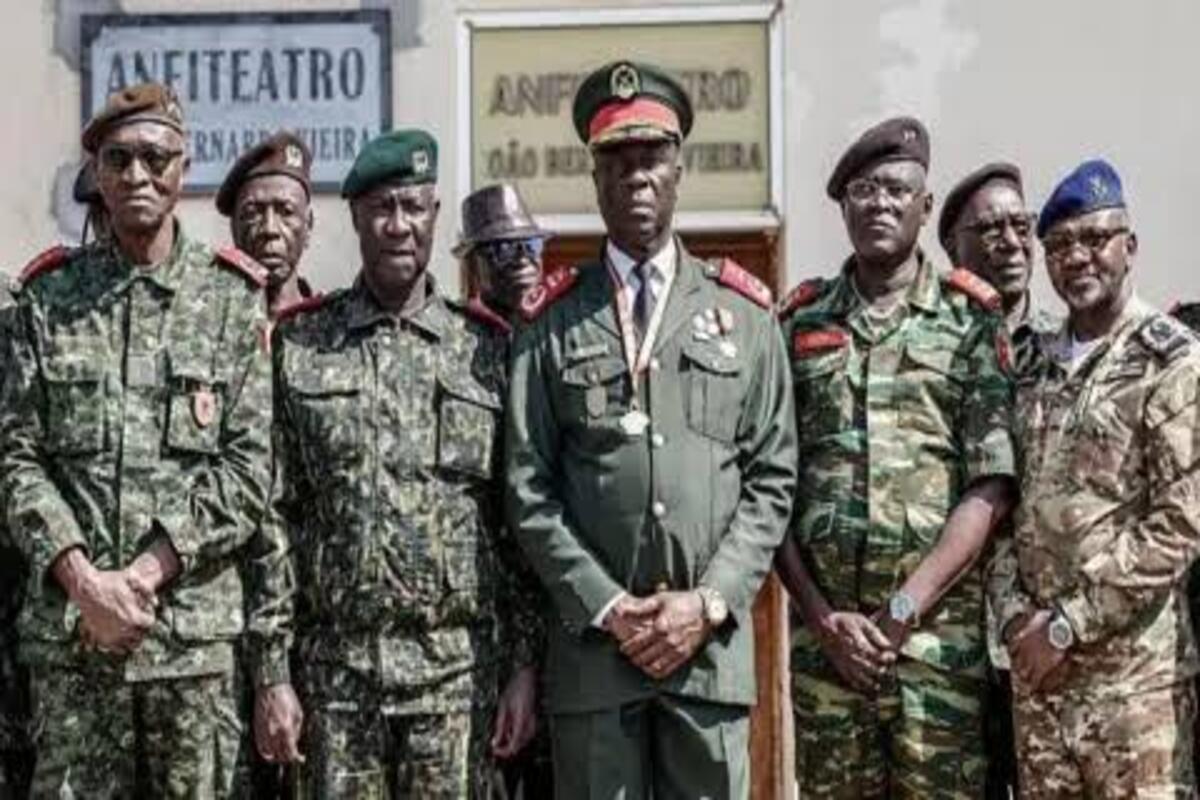
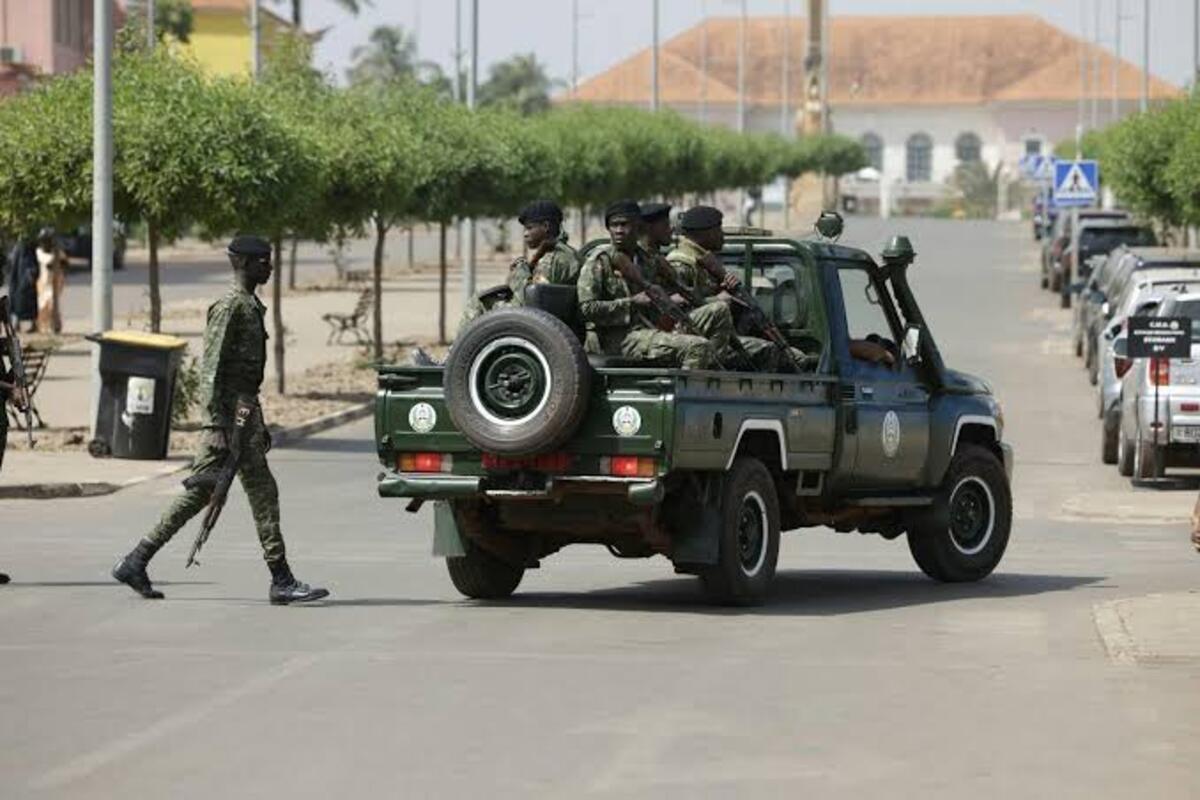
Guinea-Bissau's military seized power in November 2025 following a disputed presidential election. The coup interrupted the electoral process and installed a transitional military authority.
The referendum was subsequently organised as part of the transition towards elections and a return to civilian government.
That creates an unusual contradiction.
The military authorities say the constitutional reforms are necessary to create a more stable political system before civilian rule resumes. However, opposition groups argue that a military-led government should not be rewriting the country's political rules in a way that increases executive authority immediately before elections.
The country's main opposition party, the African Party for the Independence of Guinea and Cape Verde, boycotted the referendum and argued that the process lacked sufficient political and institutional safeguards. Opposition leader Domingos Simões Pereira accused supporters of the reforms of undermining democracy.
The result is a constitution whose legitimacy will inevitably be judged not only by the 70 percent "Yes" vote, but also by the political circumstances surrounding the referendum.
Why this matters beyond Guinea-Bissau
Guinea-Bissau is a small country, but its constitutional changes come at a particularly sensitive moment for West Africa.
The region has experienced a series of military takeovers in recent years, particularly across the Sahel. Mali, Burkina Faso, Niger and Guinea have all experienced coups since 2020, reflecting a broader crisis of confidence in civilian governments and democratic institutions.
In several of these countries, military authorities have justified their interventions by pointing to corruption, insecurity, economic hardship and the perceived failure of elected politicians.
The Guinea-Bissau case is different in one important respect.
Rather than simply extending military rule, its transitional authorities are presenting constitutional reform and elections as part of a pathway back to civilian government.
That makes what happens next particularly significant.
If the December elections are competitive, credible and broadly accepted, Guinea-Bissau could demonstrate that constitutional reform can accompany a return to civilian rule after a coup.
If the process becomes dominated by one political force, however, critics could see it as another example of democratic institutions being redesigned to accommodate concentrated executive power.
Could stronger presidential power bring stability
It could.
Guinea-Bissau's previous system clearly struggled to prevent disputes between the presidency and government from escalating into wider political crises. A stronger executive could reduce institutional rivalry and make it easier for a government to formulate and implement policy.
A president who has clear authority over the cabinet would also be more directly accountable for the government's performance.
However, stability is not simply the absence of political conflict.
A country can appear politically stable because opposition voices have been weakened, parliament has been marginalised or institutions have become too weak to challenge the government.
That kind of stability can be temporary.
True political stability requires institutions that allow disagreements to be resolved peacefully. It requires opposition parties to believe they can compete for power, citizens to trust elections and political leaders to accept defeat when they lose.
The next major test will come with the elections scheduled for December.
The country will not only be choosing a president and parliament. It will effectively be testing the new political system.
A peaceful and credible election could give the new constitution an important degree of legitimacy. A government that emerges from an accepted electoral process would have a stronger foundation to exercise the expanded presidential powers.
But if the election is disputed, opposition parties are excluded or the military continues to exercise significant political influence, the constitutional reforms could deepen the country's problems rather than resolve them.
The first president to operate under the new system will therefore inherit an unusually powerful office.
How that president uses the authority granted by the constitution could determine whether the reforms become a foundation for stronger government or another chapter in Guinea-Bissau's long history of political instability.












Comments (0)
No comments yet. Be the first to share your thoughts!