


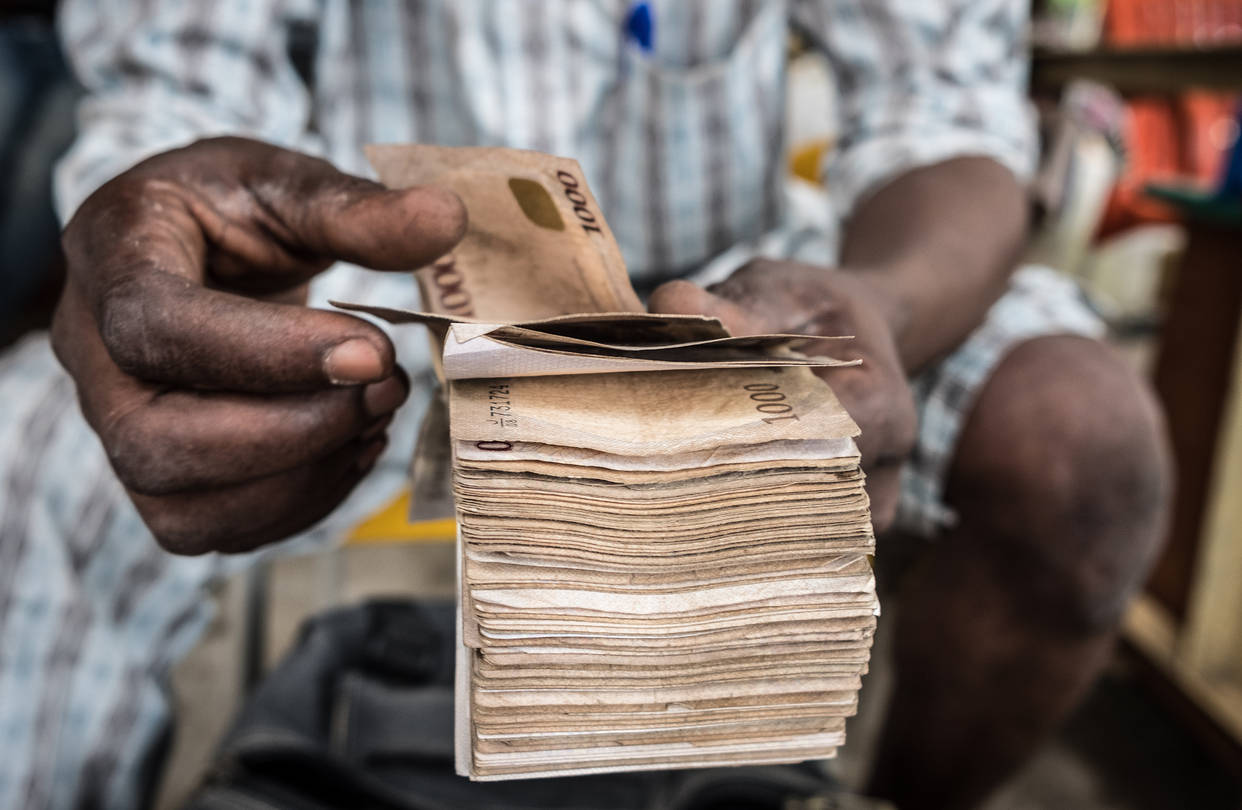
Between 2010 and 2025, Africa's external debt nearly doubled, rising from about $300 billion to more than $600 billion. Some countries spend more than 20 percent of their government revenue just servicing their debts. In 2024, sub-Saharan Africa paid approximately $62 billion in debt service, more than the entire education and health budgets of most countries combined.
The Basics: How Government Borrowing Works
Governments borrow money by issuing bonds—essentially, they sell IOUs to investors who lend them cash in exchange for interest payments. The buyers can be foreign governments, international institutions like the IMF and World Bank, private banks or pension funds. When you hear that a country has "taken out a loan," what it really means is that it has sold bonds or signed loan agreements with specific repayment terms.

The interest rate a country pays depends on how risky lenders think it is. Countries with stable economies and good track records get lower rates. Countries with high debt, political instability or weak institutions pay much higher rates.
The repayment terms vary. Some loans come with 20 or 30 years to pay back. Others require repayment in just a few years. The longer the repayment period, the lower the annual burden—but the more interest the country pays over time.
The Real Reasons African Governments Borrow
To Build Infrastructure
Roads, railways, ports, power plants, hospitals and schools require enormous upfront investment. Governments cannot simply write a cheque for a billion-dollar dam. They need to borrow to build and then repay the loans gradually as the benefits flow in.
The challenge is that infrastructure projects take time to generate returns, while debt payments start immediately. If a loan is structured with a five-year repayment period but a road takes ten years to pay for itself, the country faces a cash crunch. This is why debt sustainability matters: the loan must match the timeline of the project's economic benefits.
To Manage Crises
When COVID-19 hit, African governments borrowed to keep hospitals running, pay civil servants, provide food relief and protect their economies. When food prices spike or a drought destroys harvests, governments must borrow to feed their people and stabilise the economy.
These are not investments. They are survival measures. But they still come with interest payments. And when a crisis lasts longer than expected, countries may need to borrow again just to keep up with existing debt repayments.
To Cover Budget Deficits
Most African governments spend more than they collect in taxes. The gap—called the budget deficit—must be financed. Sometimes governments borrow to cover the deficit. Sometimes they borrow to pay off older debts that are coming due. This is called "rollover" or "refinancing."
This is where the trap often lies. When a country borrows to pay off old loans without growing its economy, its debt grows faster than its ability to repay it.
To Stabilise the Economy
When a country's currency is under pressure, foreign investors pull out and economic growth slows. Governments sometimes borrow foreign currency—usually US dollars—to prop up their currency, reassure investors and keep the economy from collapsing.
But this approach carries a major risk. If the currency weakens, the local currency cost of repaying dollar-denominated loans skyrockets. The exchange rate can turn a manageable loan into a crushing burden overnight.
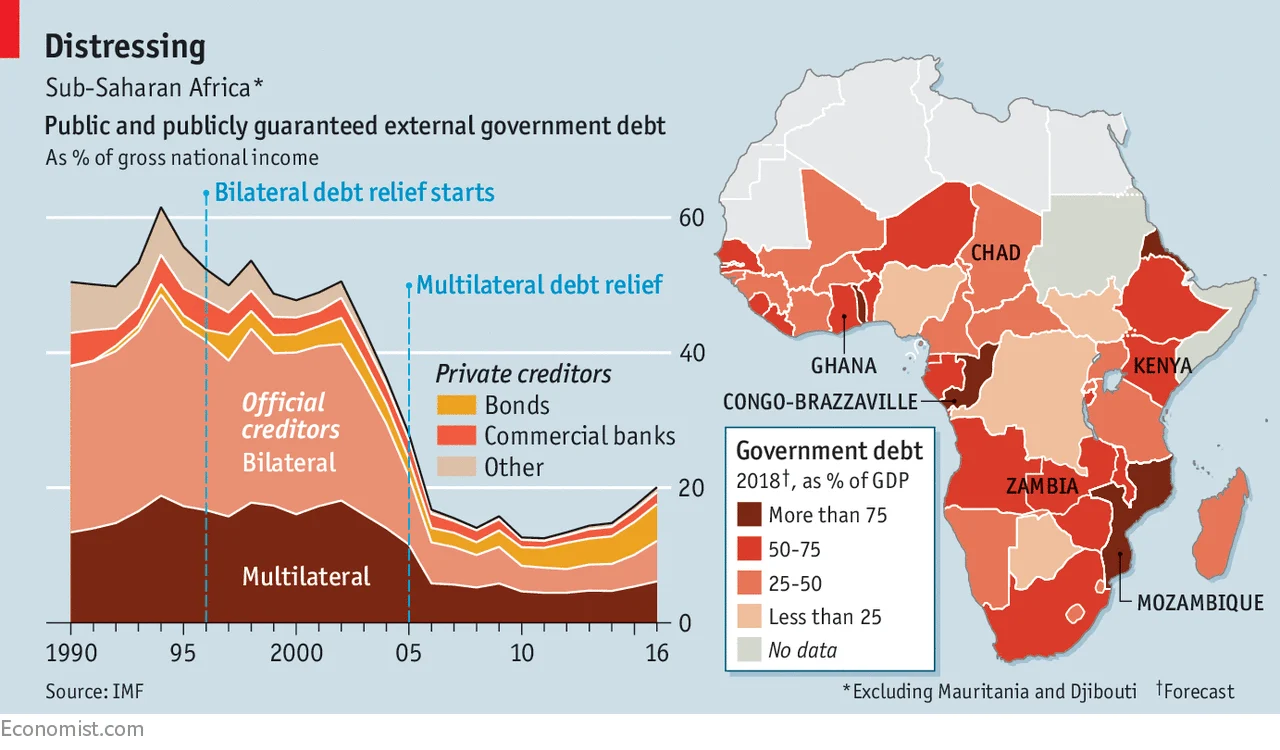
Public and publicly guaranteed external government debt
The Debt Trap: When Borrowing Becomes a Burden
The problem is not that African countries borrow. The problem is that they often borrow at expensive rates, borrow in foreign currencies that can appreciate against their own, and borrow without building the productive capacity to pay back.
Debt service—the money paid each year to service loans—is money that cannot be spent on teachers, doctors, roads or electricity. This is known as "crowding out." When debt consumes 20 percent of government revenue, it is not just an accounting problem. It is a development crisis.
Between 2010 and 2025, Africa's external debt doubled. But the economies that generate the revenue to repay that debt did not grow at the same pace. This is the central contradiction: borrowing to grow is essential, but borrowing that does not generate commensurate growth creates a cycle of dependency.
The Weight of the Past
Many African countries are still repaying loans taken decades ago. A significant portion of current borrowing goes toward refinancing that older debt, meaning the money never reaches schools or hospitals—it simply keeps the debt machine running. In some cases, this is not just a technical problem but a moral one: questions have been raised about whether loans extended by foreign governments to former dictators should be considered legitimate debts or "odious" debts that were never used to benefit the people.
The Currency Trap
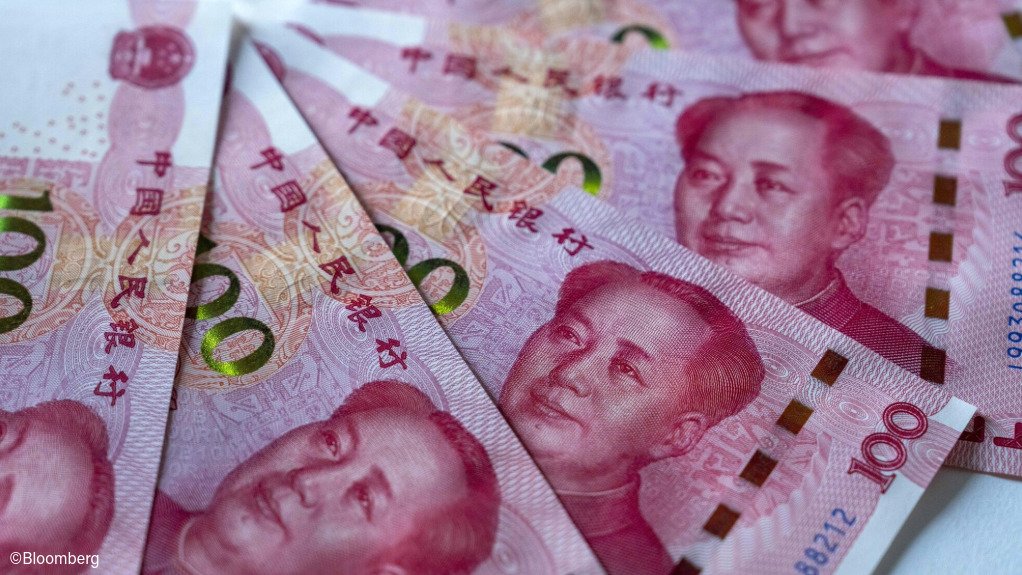
Most African debt is denominated in foreign currencies—US dollars, euros or Chinese yuan. This means that when the local currency weakens, the cost of repaying the debt automatically increases. Between 2020 and 2026, African currencies lost significant value against the dollar, meaning countries were effectively paying more for their debts even without borrowing any new money.
The reverse is also true. When a country's currency strengthens, its debt becomes more manageable. This is a powerful incentive for governments to maintain economic stability.
The Cost of Borrowing
African countries pay vastly different interest rates. In 2025, Kenya was paying nearly 15 percent interest on some of its loans, while Germany was paying less than 1 percent. African governments are penalized with higher interest rates because lenders perceive them as riskier, whether or not that perception is accurate.
Between 2018 and 2024, Nigeria paid over $2 billion in interest on loans from foreign banks, while a single loan to the World Bank for $1.5 billion is currently costing South Africa 6-month SOFR plus 1.35%.
The Lenders
The World Bank and IMF
The World Bank and IMF are the largest multilateral lenders to African countries. They offer loans at below-market rates, with long repayment periods. However, their loans come with conditions. Governments must implement specific reforms to unlock funding—often changes to tax policy, spending priorities or state-owned enterprises.
These conditions are contentious. Critics argue that the reforms sometimes impose austerity on countries already struggling, while supporters argue that they prevent waste and improve government effectiveness.
China and Other Bilateral Lenders
China has become Africa's largest bilateral lender, with loans for infrastructure, energy and telecommunications projects. These loans are often structured differently than those from Western institutions. They may have lower interest rates but shorter repayment periods, and they are often tied to the use of Chinese contractors and suppliers.
Chinese lending has also been less transparent than other types of borrowing. The full terms of many loans have not been disclosed, making it difficult to assess whether the arrangements are fair.
Commercial Banks and Bond Markets
Private banks have also become significant lenders, attracted by relatively high interest rates. Governments borrow from them through Eurobonds—bonds sold on international markets. In 2024, sub-Saharan African countries raised about $16 billion through such bonds.
Commercial loans often have shorter maturities and higher interest rates than multilateral loans, but they also come with fewer conditions.
The Rise of Domestic Borrowing
In some countries, governments have started borrowing more from their own citizens. This can reduce exposure to foreign exchange risk, but it can also crowd out private investment by pushing up domestic interest rates. When the government borrows heavily, it absorbs the savings that might otherwise be invested in businesses and households, making it harder for the private sector to grow.
The Path Forward
Debt Restructuring
When countries cannot repay their debts, they can negotiate with their creditors to restructure them. This may involve extending repayment periods, reducing the total amount or lowering the interest rate. The process can be difficult, but it can also provide relief.
Ethiopia has been a notable success story. It defaulted on its Eurobond in December 2023 but agreed to a restructuring that provided significant relief. Zambia also underwent debt restructuring, while Ghana did so in recent months. South Africa has also signed a $1.5 billion loan from the World Bank.
Better Borrowing Terms
Countries are increasingly negotiating better terms. Some loans now include clauses that allow payment to be suspended during natural disasters or public health emergencies. Others are structured so that repayments are tied to the price of commodities, reducing the burden when prices fall.
Lending Transparency
The African Union has been pushing for greater transparency in sovereign lending, including a requirement that all loan contracts be made public. This would make it easier to assess whether terms are fair and whether borrowed money is being spent wisely.
Domestic Resource Mobilization
Ultimately, the most sustainable solution is for African countries to collect more of their own revenue. Across the continent, tax-to-GDP ratios are among the lowest in the world, meaning that many governments are not capturing the resources they need to fund development. Strengthening tax collection, reducing tax evasion and improving the efficiency of public spending could reduce the need to borrow.
The Bigger Picture
African countries do not borrow because they want to. They borrow because they must—to build infrastructure, manage crises and stabilise their economies. But the rules of borrowing are not always designed with them in mind.
High interest rates, short repayment periods and foreign currency obligations can turn a necessary loan into a crushing burden. More often than not, the conditions attached to some loans can require reforms that undermine public services, making it harder for countries to grow their way out of debt.
The problem is not Africa's appetite for debt. It is the structure of the debt itself!











Comments (0)
No comments yet. Be the first to share your thoughts!